
New SellCell.com research reveals that 73% have stayed awake worrying about an unanswered message, while 90% have checked someone’s online activity to see if they’re being ignored.
Being left on read might seem like a small part of everyday life, but new SellCell research suggests it can have a surprisingly big emotional impact. In a survey of 600 US young adults aged 18–21, 95% said they’d felt anxious or stressed over an unanswered message, nearly three-quarters had stayed awake worrying about a reply, and nine in ten had checked someone’s online activity to see whether they were being ignored.
Introduction
I’m 17, and like most people my age, I’ve grown up with messaging apps being a huge part of everyday life.
Whether it’s Snapchat, iMessage, Instagram or WhatsApp, we’re constantly communicating through our phones. But there’s one thing almost everyone seems to have experienced: being left on read.
You send someone a message, they open it, and then… nothing.
Suddenly, you’re wondering why they haven’t replied. Are they busy? Are they ignoring you? Have you said something wrong?
It might sound dramatic, but when you’re used to being able to contact someone instantly, even a simple unanswered message can leave you overthinking.
I wanted to find out whether being left on read was just something my friends and I overthink, or whether it was affecting other young people too. What surprised me most wasn’t how many people said they’d felt anxious — it was how many had actually lost sleep over waiting for a reply.
To investigate, SellCell.com surveyed 600 young adults aged 18–21 across the United States, asking about anxiety, unanswered messages, sleep, phone-checking habits and online activity.
We conducted two surveys containing the same five questions, with 300 men and 300 women taking part.
And the results were pretty surprising.
Key Findings
- 95.3% of young adults surveyed have felt anxious or stressed after being left on read by someone they care about.
- 72.7% have stayed awake at night worrying about why someone hasn’t replied to their message.
- 55.4% said they check their phones every 15 minutes or more frequently after being left on read.
- 90.3% have checked someone’s online status or social media activity to see whether they’re being ignored.
- 93.3% have assumed someone was upset with them or that they’d done something wrong because they were left on read.
Survey Results & Findings
The results suggest that being left on read isn’t always something young people simply shrug off. For many of those surveyed, it has meant sleepless nights, repeatedly checking their phones and looking at someone’s social media activity for clues about why they haven’t replied.
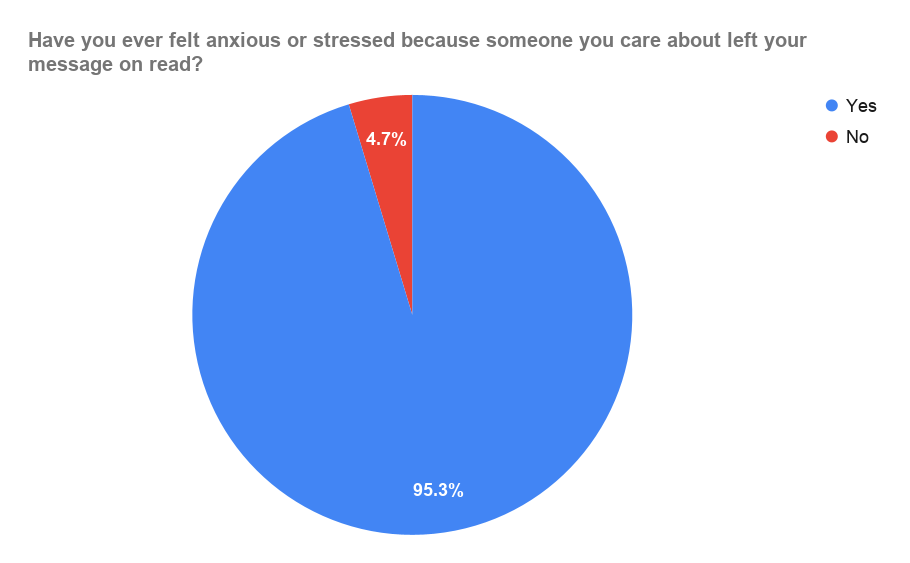
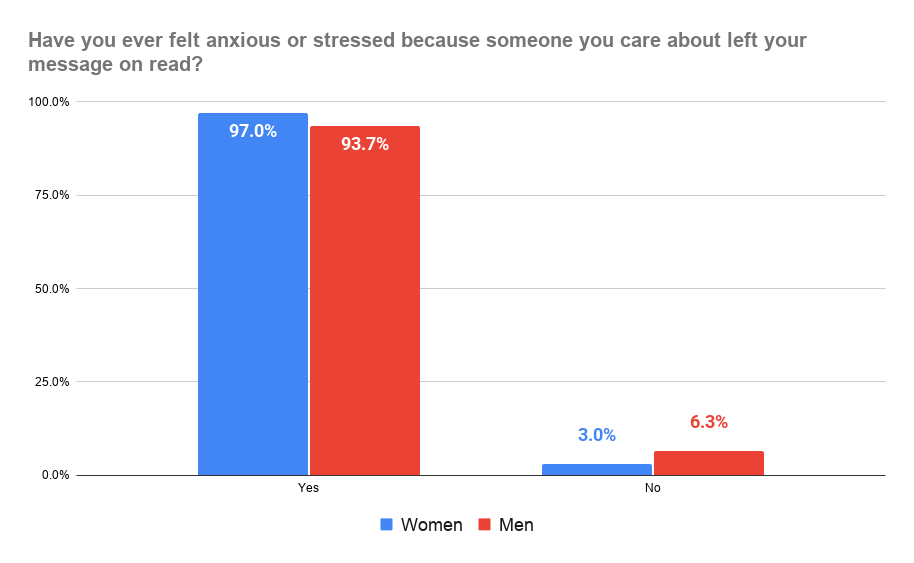
Question 1: Have you ever felt anxious or stressed because someone you care about left your message on read?


Key findings:
- 95.3% of respondents said they had felt anxious or stressed after being left on read, compared with just 4.7% who hadn’t.
- 97% of women reported experiencing these feelings, compared with 93.7% of men.
- The findings show that this experience was reported by the overwhelming majority of both men and women surveyed.
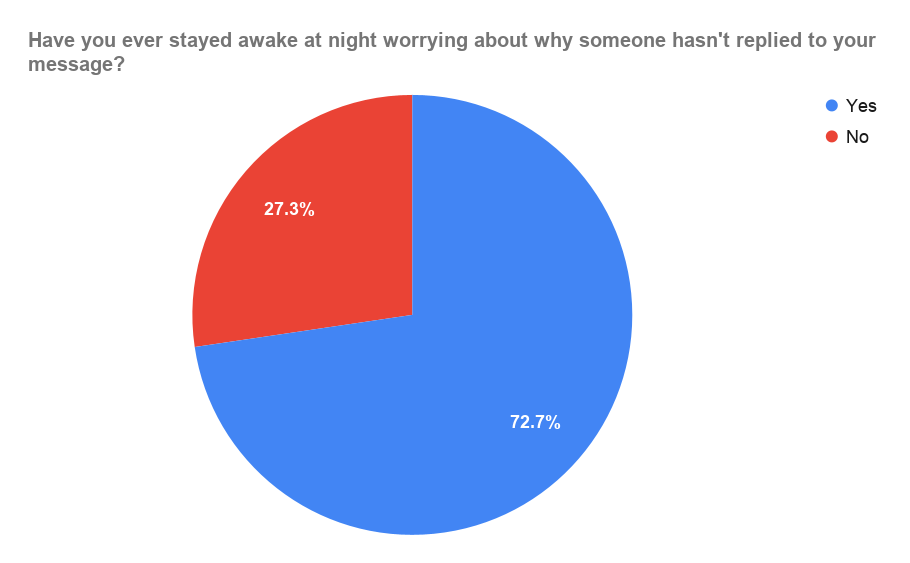
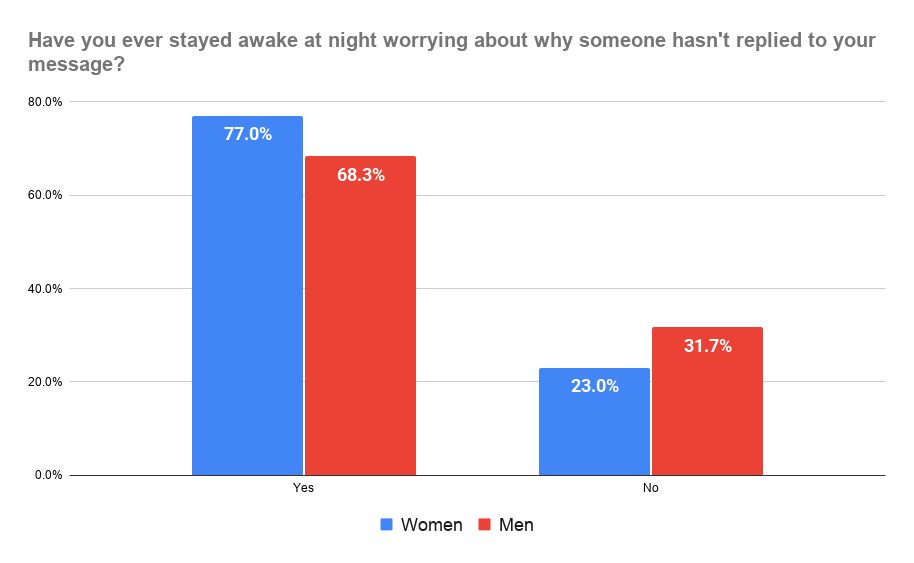
Question 2: Have you ever stayed awake at night worrying about why someone hasn’t replied to your message?


Key findings:
- 72.7% of young adults surveyed said they’d stayed awake worrying about an unanswered message.
- 77% of women reported this experience, compared with 68.3% of men.
- Women were 8.7 percentage points more likely than men to report having stayed awake worrying about a reply.
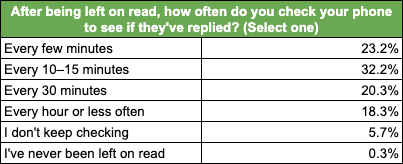
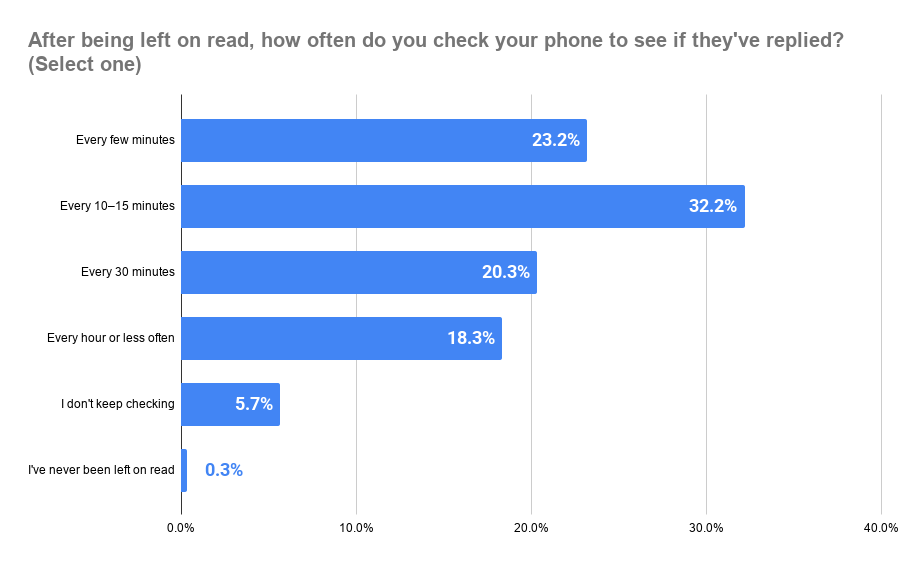
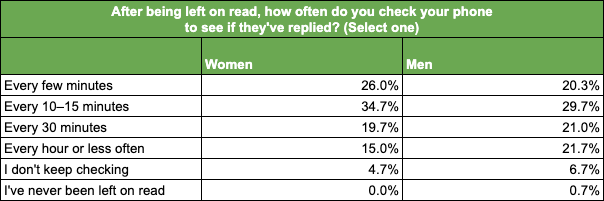
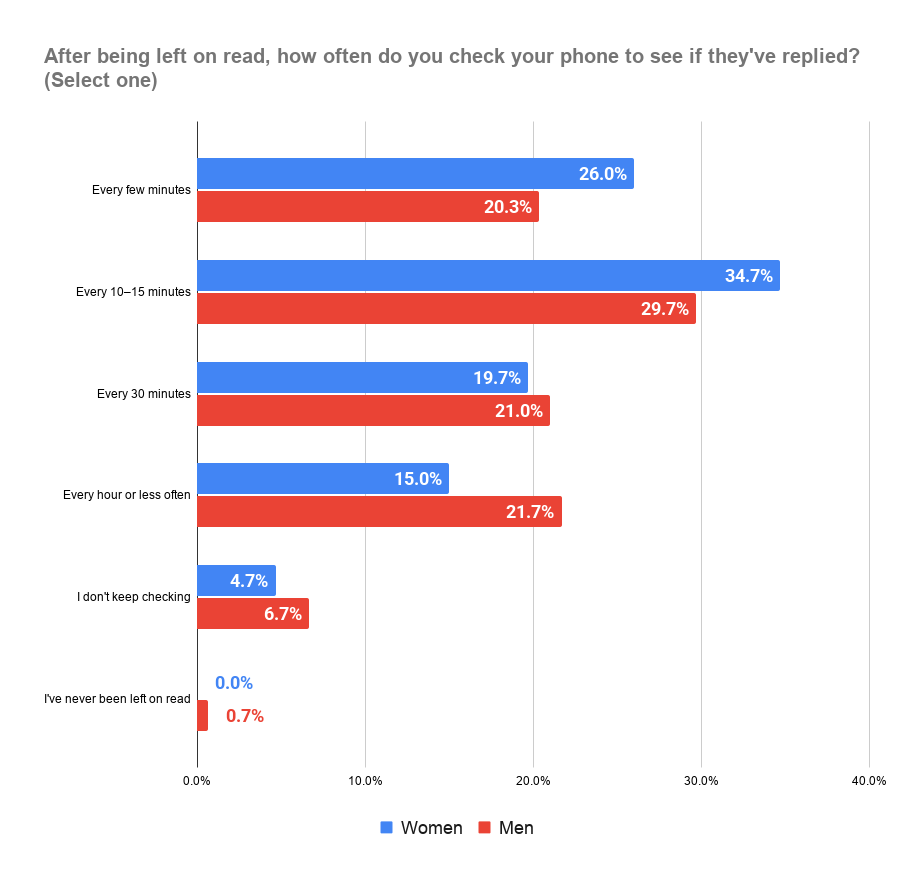
Question 3: After being left on read, how often do you check your phone to see if they’ve replied?
Key findings:
- 55.4% of respondents said they check their phones every 15 minutes or more frequently after being left on read.
- 23.2% check every few minutes, while a further 32.2% check every 10–15 minutes.
- 60.7% of women reported checking at least every 15 minutes, compared with 50% of men.
- Just 5.7% said they don’t keep checking their phones.
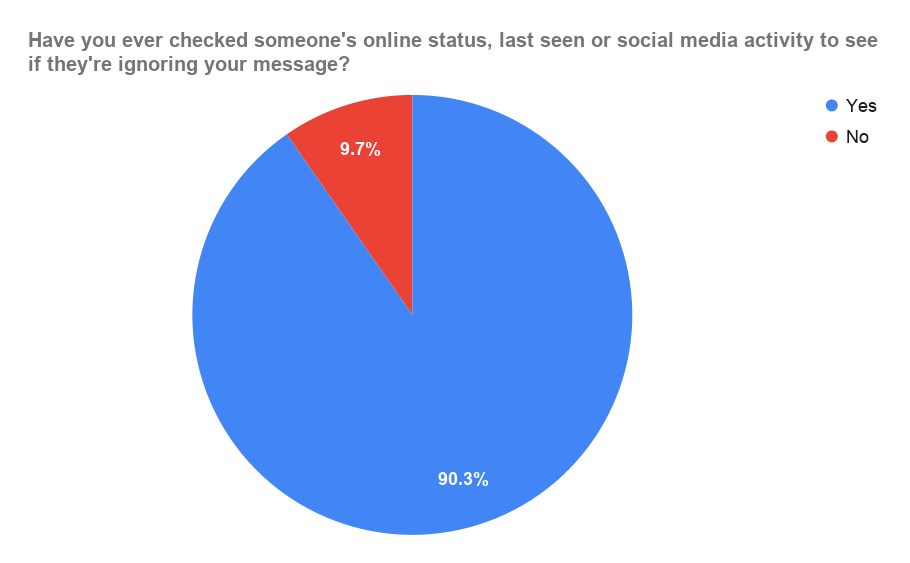
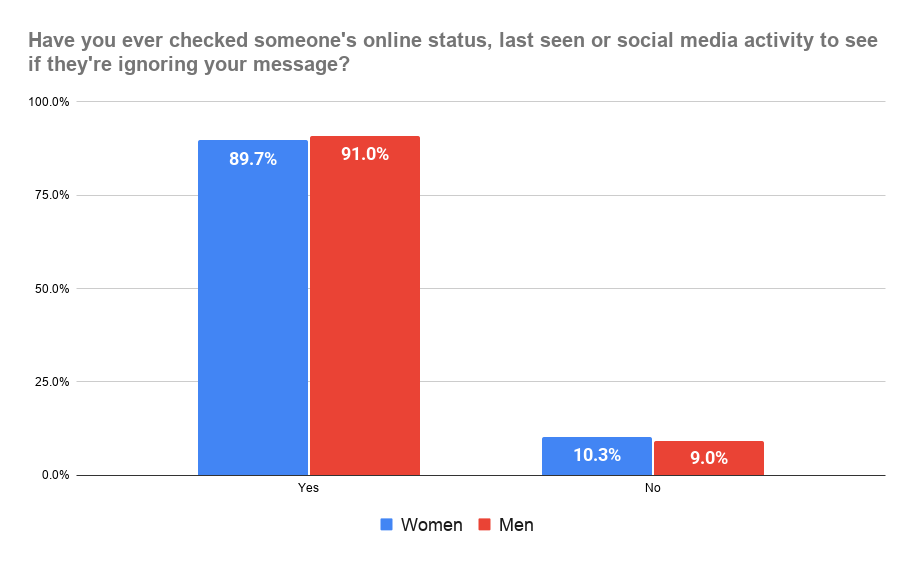
Question 4: Have you ever checked someone’s online status, last seen or social media activity to see if they’re ignoring your message?


Key findings:
- 90.3% of respondents said they had checked someone’s online status or social media activity to see whether they were being ignored.
- 91% of men reported doing this, compared with 89.7% of women.
- The results were very similar across both groups, with approximately nine in ten men and women reporting this behaviour.
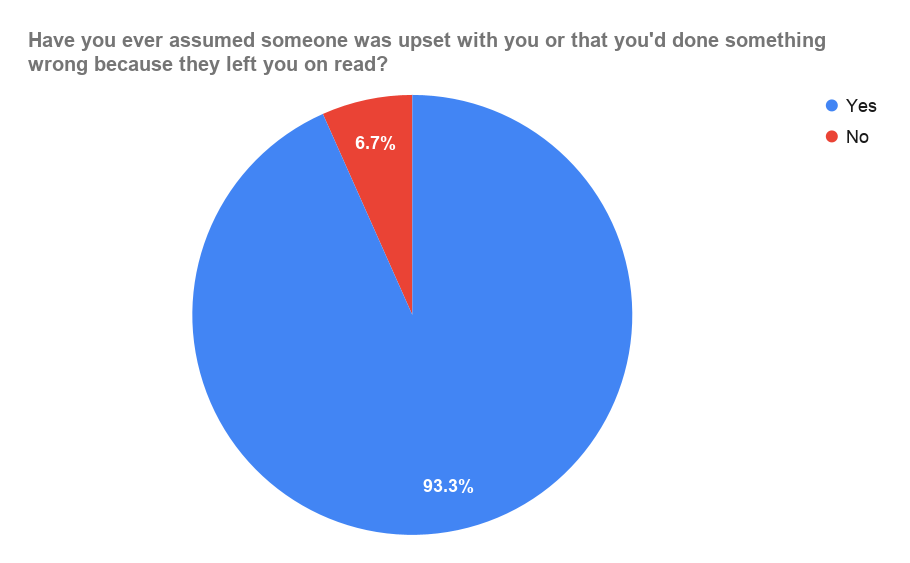
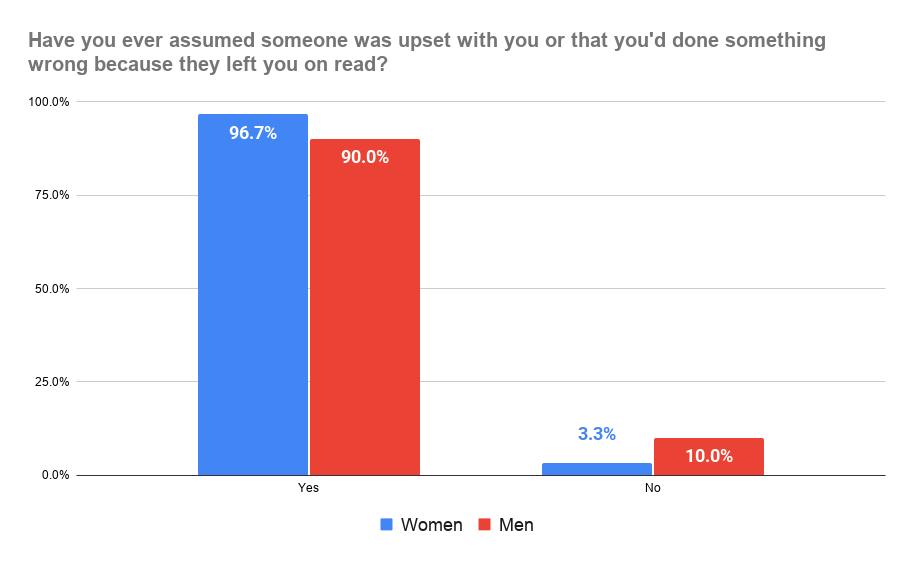
Question 5: Have you ever assumed someone was upset with you or that you’d done something wrong because they left you on read?


Key findings:
- 93.3% of respondents said they’d assumed someone was upset with them or that they’d done something wrong after being left on read.
- 96.7% of women reported making this assumption, compared with 90% of men.
- The results show that self-doubt following an unanswered message was commonly reported by both groups.
What Do These Results Mean? An Expert’s View
To understand why being left on read can make young people feel anxious, overthink messages or repeatedly check their phones, SellCell spoke to Dr. Debra Kissen, PhD, MHSA, Founder and CEO of Light On Anxiety CBT Treatment Centers.
Dr. Kissen explains that unanswered messages can create uncertainty, leaving people to imagine reasons why someone hasn’t responded.
“Being left on read creates an information gap, and anxiety loves to fill in the blanks: ‘Are they upset? Did I say something wrong?'”
She also explains how repeatedly checking for a reply can reinforce the urge to keep checking.
“Phone checking can become a compulsion when its main purpose is to relieve the discomfort of not knowing. Each check offers the possibility of reassurance, but repeatedly reaching for that relief can strengthen the urge to check again. We miss the opportunity to learn that we can handle uncertainty.”
Her final advice is to avoid allowing an unanswered message to take control of the day.
“Someone else’s response time does not have to set the agenda for your day. Send the message, put down the phone and go participate in your own life. You can check back later.”
Expert: Dr. Debra Kissen – Light On Anxiety CBT Treatment Centers
Conclusion: Have We Started Expecting Everyone to Be Available All the Time?
As a 17-year-old who’s grown up with Snapchat, iMessage and social media, I find it quite ironic that something designed to make communicating easier can actually give us so much more to worry about.
What surprised me most about this research was just how many young adults have experienced these feelings, especially how many have stayed awake at night worrying about an unanswered message.
The thing is, I’ve definitely left people on read myself without thinking twice about it. Sometimes you’re busy, distracted or just forget to reply. It doesn’t mean you’re annoyed with someone or deliberately ignoring them.
So why do we sometimes assume the worst when someone does exactly the same thing to us?
Of course, our survey doesn’t prove that messaging apps cause anxiety or sleep problems, but it does show how common these experiences were among the young adults we surveyed.
I think if there’s one thing I’ve taken away from this research, it’s that we probably need to stop reading so much into every little thing that happens on our phones.
Just because someone has seen your message doesn’t mean they have to reply straight away, and it certainly doesn’t mean you’ve done something wrong.
It’s strange to think that something as small as two blue ticks or a ‘Seen’ notification can have such a big effect on how someone feels — or even whether they get to sleep that night.
Maybe the biggest question isn’t why people leave us on read, but why we’ve started expecting everyone to be available all the time.
Methodology
SellCell.com commissioned a survey of 600 young adults aged 18–21 across the United States through Prolific, conducted between 12 and 20 October 2026, to investigate their experiences of being left on read.
The research consisted of two surveys containing the same five questions, with 300 male and 300 female respondents.
Participants were asked about their experiences of anxiety or stress, staying awake worrying about unanswered messages, checking their phones for replies, monitoring someone else’s online activity and assuming they had done something wrong.
The results were analysed overall and by gender, with percentages rounded where appropriate.
The survey was conducted using Prolific participants rather than a nationally representative probability sample. Findings are based on self-reported experiences and do not establish that being left on read directly causes anxiety or sleep problems. Questions asking whether respondents had ever experienced something do not establish how frequently or severely it occurred.
Our content is created in good faith and reviewed regularly - if you spot an error, please contact corrections@sellcell.com. Read our Editorial Policy


